If you have tried to buy 5-gallon Mylar bags this year and found them out of stock or limited to a few per order, you are not imagining it. The shortage is real, and it does not start with the plastic. It starts with the thin layer of aluminum foil inside every genuine Mylar bag.
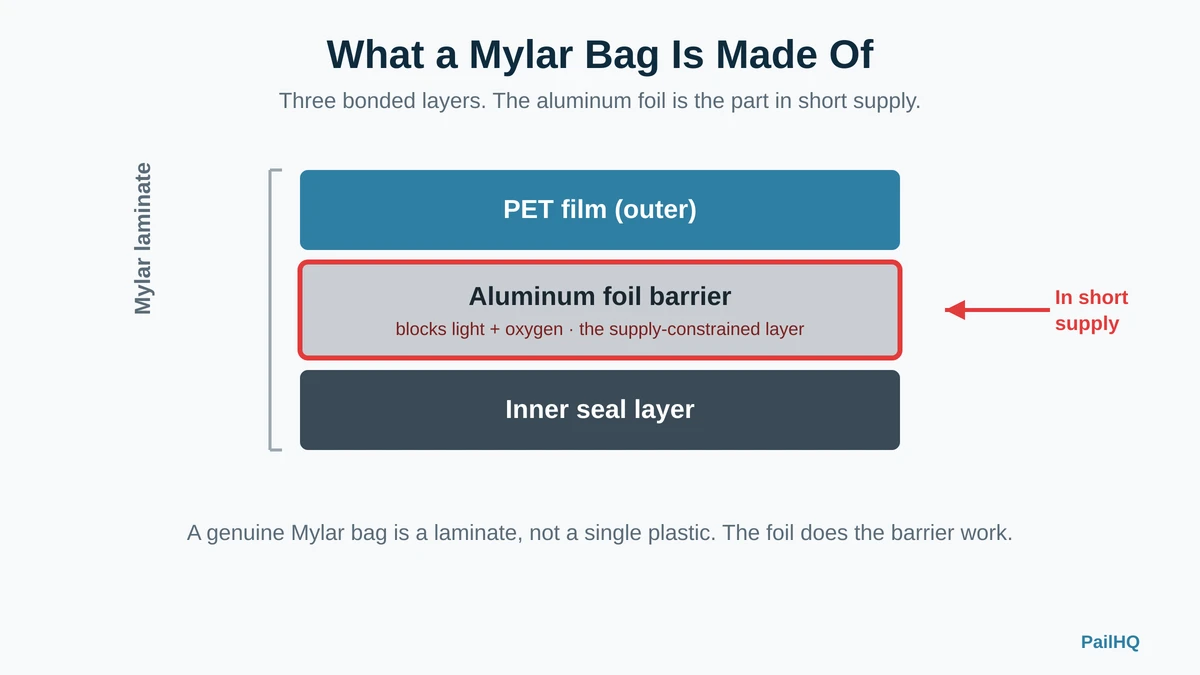
A real Mylar bag is not one material. It is a laminate: a layer of PET film bonded to a layer of aluminum foil. The foil is what blocks light and oxygen, and the foil is what is in short supply.
What is actually driving the Mylar shortage
Aluminum foil supply tightened sharply through 2026. A fire at a major Novelis aluminum facility cut sheet and coil capacity, inventories were already low, and energy and freight costs climbed on top of that. Foil makers responded the way suppliers do when raw material is rationed: they capped how much any one customer can buy, stretched lead times, and raised prices. Several foil producers posted increases of 10 to 25 percent in late 2026, with more scheduled for January 2027.
Because Mylar bags use that same foil for their barrier layer, the squeeze passed straight through to anyone selling or buying them. Smaller buyers feel it first, since they have the least purchasing leverage and are the first to get put on allocation.
Demand did not help. Long-term food storage stayed popular, so more buyers were chasing the same constrained foil supply at once. The result is what you see on store shelves: sold-out listings, per-order limits, and higher prices.
What this means if you store food
Two practical things.
First, do not panic-buy the thinnest bag you can find just because it is in stock. Mil thickness matters for durability, not for the oxygen barrier. A 5-mil bag and a 7-mil bag both seal out oxygen when used with absorbers. The thicker bag resists punctures better for sharp dry goods like pasta or beans, but either one protects rice and flour well.
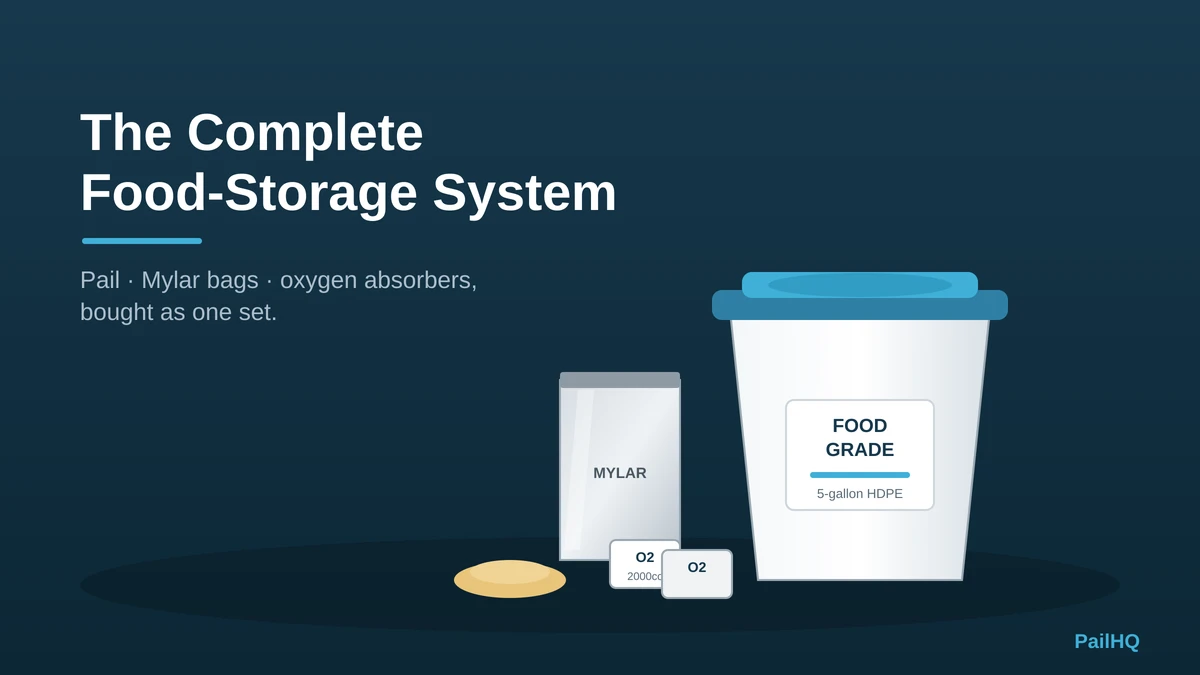
Second, buy the complete system when you can get it, rather than chasing bags alone. A food-grade pail, Mylar bags sized for it, and the right oxygen absorbers work together. Sourcing them separately in a shortage means you end up with mismatched parts.
How to store dry food step by step
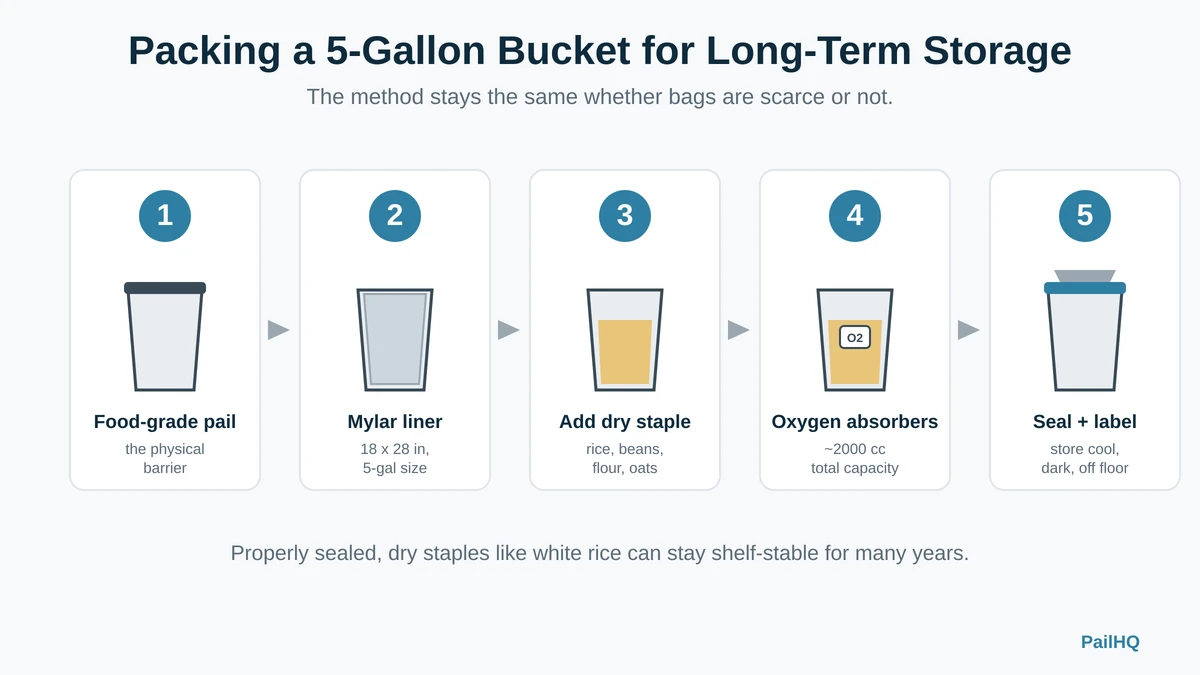
The method does not change because supply is tight. It changes only in that you should secure your materials as a set.
- Start with a food-grade pail. The pail is the physical barrier against pests, moisture, and handling. A 5-gallon pail holds roughly 30 to 35 pounds of rice.
- Line the pail with a 5-gallon Mylar bag sized for it. Standard is 18 by 28 inches.
- Add your dry staple. White rice, dried beans, flour, sugar, and oats store well. Avoid high-oil or high-moisture foods.
- Add oxygen absorbers. For a 5-gallon bag, plan on about 2,000 cc of total absorbing capacity. Keep unused absorbers sealed, since they begin working the moment they meet air.
- Seal the Mylar bag, close the pail, label it with the contents and date, and store it cool, dark, and off the floor.
Done correctly, dry staples like white rice can stay shelf-stable for many years.
Buying through a shortage
When bags are on allocation, the reliable move is to buy from someone who already has the complete kit in stock rather than assembling parts from several out-of-stock sellers. Our Food-Grade Storage Kit includes the pail, five 5-mil Mylar bags, oxygen absorbers, and the storage guide as one set, so you are not left with a pail and no bags, or bags and no absorbers.
Frequently asked questions
Why are Mylar bags out of stock in 2026?
The aluminum foil layer inside Mylar bags is in short supply because of reduced foil production capacity and strong demand. Foil makers have limited how much customers can buy, which has reduced Mylar bag availability.
Are thinner Mylar bags worse for food storage?
Thickness affects puncture resistance, not the oxygen barrier. A 5-mil bag seals out oxygen as well as a 7-mil bag when used with oxygen absorbers. Thicker bags hold up better against sharp contents.
How many oxygen absorbers do I need for a 5-gallon bag?
Plan on about 2,000 cc of total oxygen-absorbing capacity for a 5-gallon Mylar bag. Keep unused absorbers sealed until you are ready to use them.
Can I store food long-term without Mylar bags?
The Mylar bag is the primary oxygen and light barrier. A food-grade pail alone protects against pests and physical damage but allows slow oxygen migration over years. For maximum shelf life, use the pail, Mylar bag, and oxygen absorbers together.